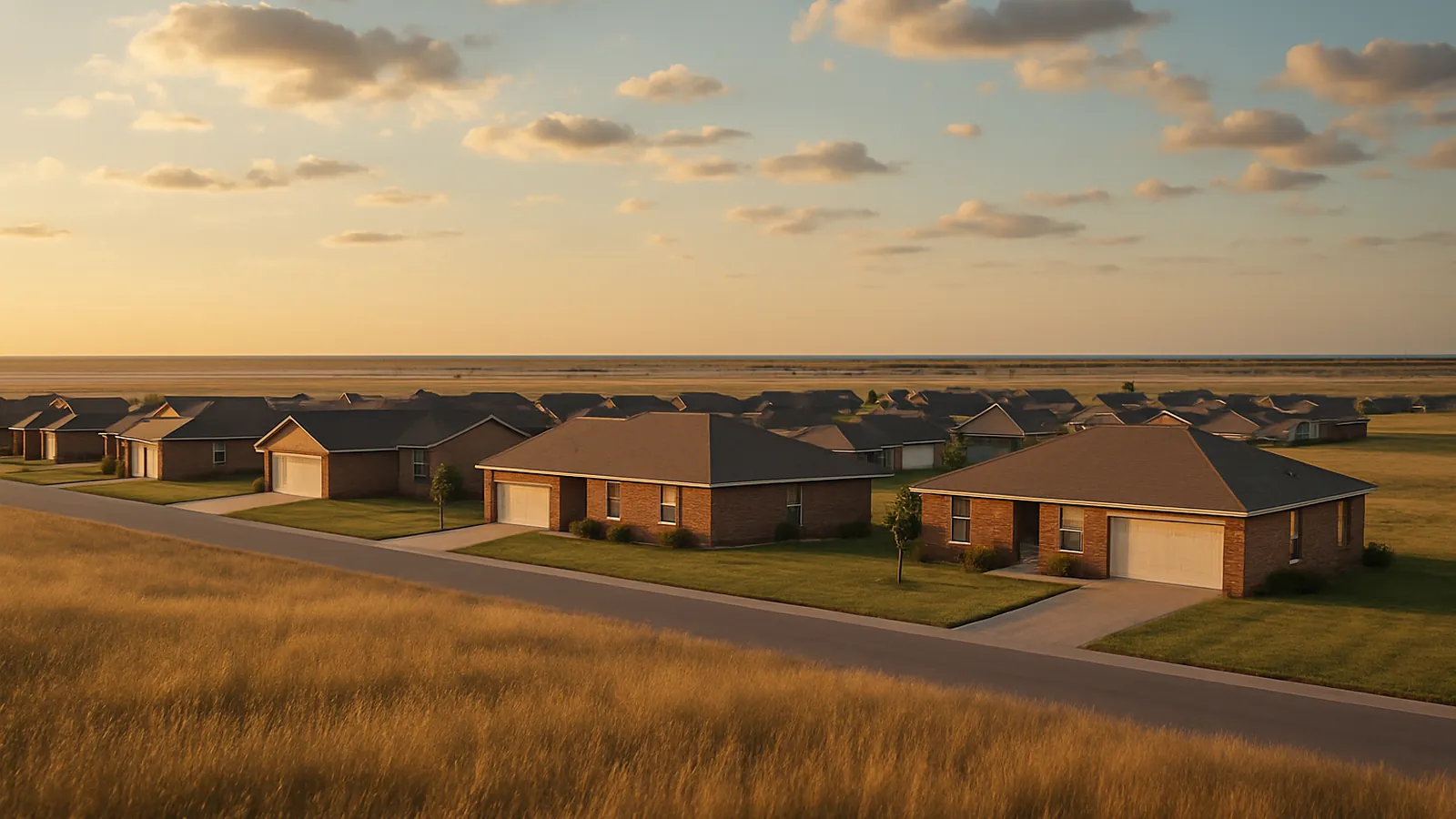
Foundation settlement repair in Fayetteville runs $4,000–$15,000, piers $1,200–$3,000 each. Two mechanisms drive it here: soil piping down into Ozark karst, which removes support permanently, and pockets of expansive clay, which cycle with moisture. A floor elevation survey separates them.
How to tell subtraction from cycling, why one lot can have both, and what the survey has to produce before anyone quotes piers.
Subtraction versus cycling
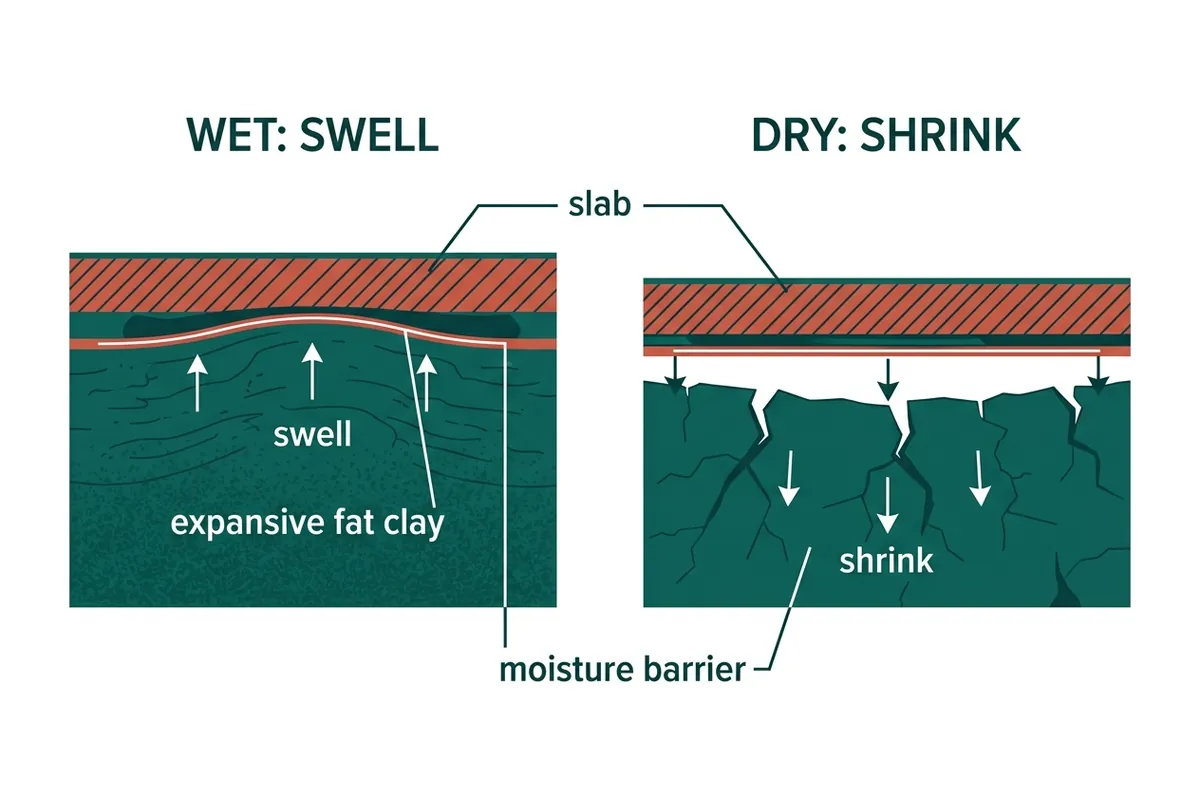
Most expansive-clay markets have one story: soil swells when wet, shrinks when dry, and the house rides the cycle. Northwest Arkansas has that story plus a second one that behaves nothing like it. Underneath the region is Ozark Plateau limestone that has been dissolving along its joints for millennia, and water moving through those openings carries fine soil down with it.
The distinction is practical, not academic. Clay movement reverses — a door that sticks in August works fine in April. Soil loss into karst does not reverse. The support is gone, and it stays gone, and the drop continues in one direction until something is put under the house. Repairs that work for one mechanism are wasted on the other.
Reading which one you have
| Evidence | Points to soil loss (karst) | Points to clay cycling |
|---|---|---|
| Crack width over months | Widens only, may accelerate | Opens in dry spells, closes after wet ones |
| Doors and windows | Get progressively worse | Bind seasonally, then release |
| Floor elevations | One area low and deepening | Center high or perimeter high, changes with season |
| Yard | Depressions, a spot that keeps needing fill | Soil that cracks open in late summer |
| Typical scope | Piers plus void filling | Moisture control, piers only if drop is real |
The third mechanism: fill on a growing metro
Northwest Arkansas has been among the fastest-growing regions in the country, and that growth put a great many houses on ground that was pasture or woodland a short time ago. On sloped sites, building a level pad means cutting into the hill on one side and filling on the other — and the filled side only performs as well as its compaction.
Fill that fell short of specification consolidates for years. The classic signature is a house in its third to eighth year with brick cracking its owners find shocking on something so new, and movement concentrated on the downhill half of the footprint. It is not karst and it is not clay; it is construction history, and it is worth identifying because builder warranty windows sometimes still apply.
What the survey has to produce
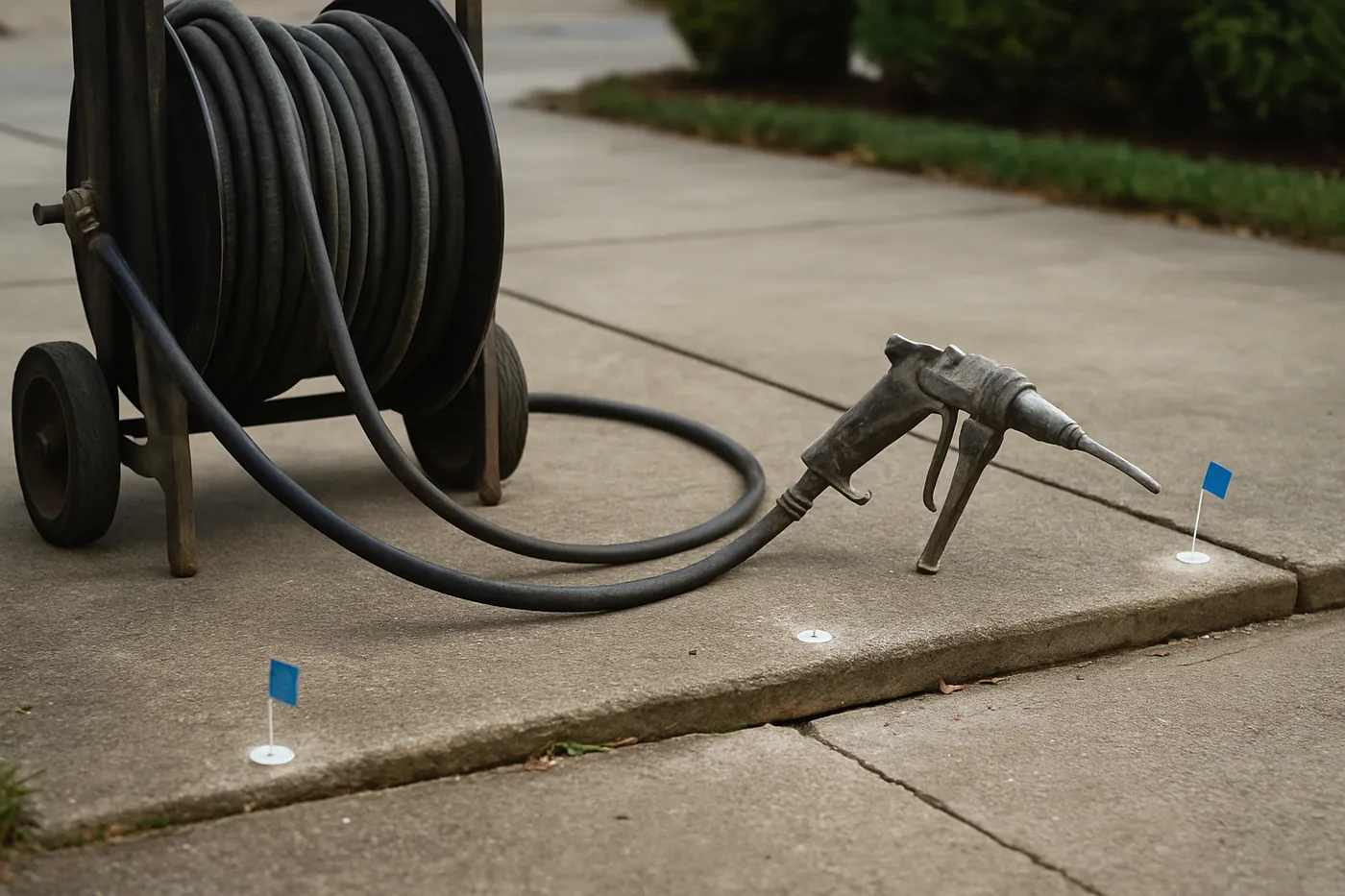
- Floor elevation readings across the full footprint, recorded as numbers you keep
- A stated low point and the total differential across the house
- Crack widths measured and dated, so future change is checkable
- Exterior water review — downspouts, grade, and where runoff concentrates
- Which mechanism the evidence supports, stated plainly, including “not enough evidence yet”
- A pier layout justified by the elevations, if piers are recommended at all
Ask for that document whether or not you hire the specialist. If the readings are flat, the honest recommendation is often monitoring plus a few hundred dollars of water control. Pricing for everything is in the cost guide.
Settlement questions, straight answers
What does foundation settlement repair cost in Fayetteville?
Most settlement repairs run $4,000-$15,000, with piers commonly $1,200-$3,000 each and any required void filling priced by measured volume on top of that. The spread is wide because two different mechanisms cause settlement here, and they carry different scopes. A floor elevation survey is what narrows the number; many local specialists don't charge for it, so ask when they call.
How can two houses on the same street need different repairs?
Because the ground under them can genuinely differ. The Ozark karst surface is uneven - sound limestone in one place, soil-filled channels a few feet away - and pockets of expansive clay sit above it in some spots and not others. Soil type can change inside a single lot, which is why a neighbor's quote is not a useful guide to yours.
Is my house settling or is the soil swelling?
Elevation readings and timing separate them. Settlement from lost support shows a section low and getting lower, with cracks that widen and do not recover. Clay swelling shows movement that reverses - a floor that rises after a wet stretch and drops in a dry one, with doors that bind seasonally. The pattern over two or three months answers it.
Does new construction settle in Northwest Arkansas?
New construction does settle in Northwest Arkansas, and this region has an unusual amount of it. Rapid growth has put a large share of the housing stock on ground that was recently pasture or woodland, often with engineered fill and cut-and-fill grading on sloped sites. Fill that was not compacted to specification consolidates for years, and the movement typically appears in years three through eight.
What does a floor elevation survey actually show?
The shape of the problem. Readings taken across the whole footprint produce a contour of the floor, showing where the low area is, how deep it is, and which direction it falls. That contour drives pier placement. Scoping a repair from where cracks are visible instead of from elevations is how houses end up with piers in the wrong places.
Get a Fayetteville foundation evaluation
Tell us what the house is doing — a crack that keeps growing, a door that quit latching, a floor that dips toward one corner — so the evaluation starts from what you have seen. A local specialist serving Fayetteville calls you back.