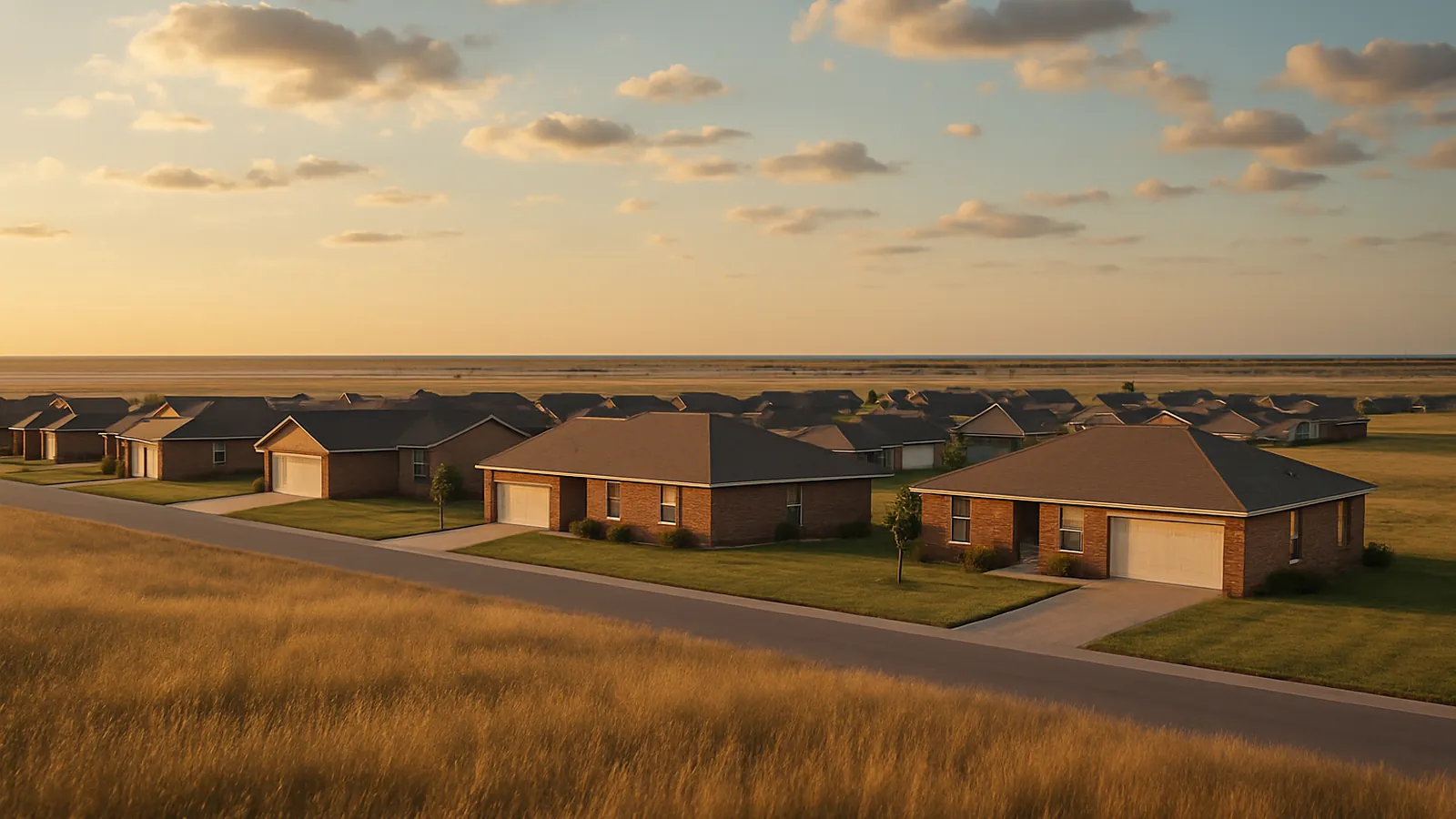
Foundation piering in Fayetteville runs $4,000–$15,000 for most repairs, with piers commonly $1,200–$3,000 each. Piers are driven to competent bearing in Ozark limestone, whose depth changes sharply across a single lot — so pier count and length are set by what the drive finds, not by a quoted average.
Why karst bedrock behaves differently than deep clay, how a pier can hit rock and still be wrong, and what a real pier bid contains.
Pinnacled rock is the local condition
Northwest Arkansas sits on the Ozark Plateau, where limestone has been dissolving along its joints and bedding planes for a very long time. That produces a bedrock surface shaped like a set of teeth: high pinnacles of sound rock separated by low channels filled with soil, clay, and sometimes nothing at all. The distance between a pinnacle and a channel can be a few feet.
For a foundation, that geometry is the whole story. A footing spanning a pinnacle and a soil-filled low is being supported unevenly from the day it was poured, and it takes only a wet season or two of soil movement in the low spot for one part of the house to go down while the part over rock stays put. The result reads as classic settlement, but the cause is not consolidation — it is that the support was never uniform.
What a pier is actually doing here
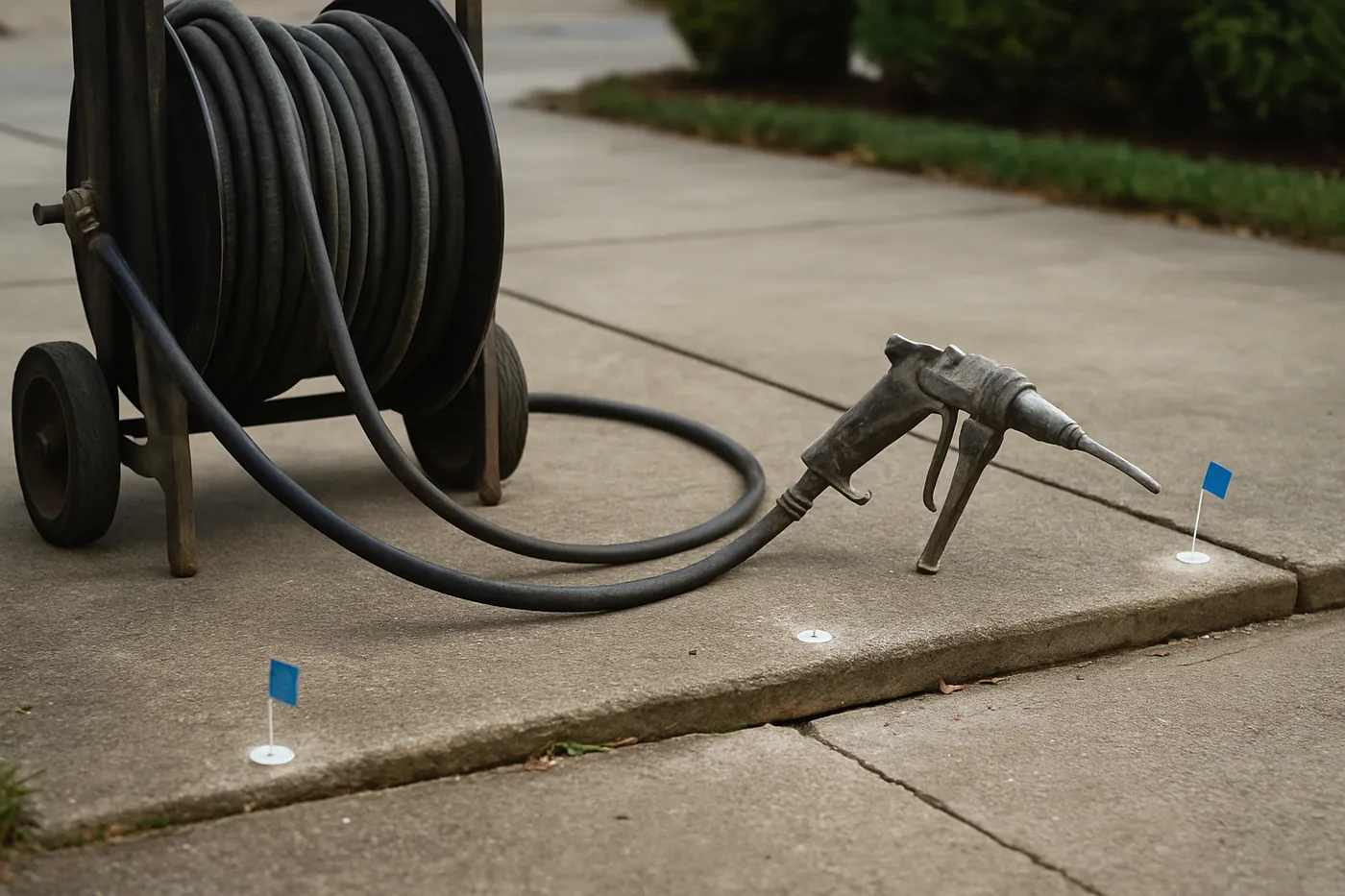
Piering transfers the structure’s load past the unreliable material to something that will not move. On deep expansive-clay ground that means driving past an active zone. Here it usually means finding sound limestone — which is often shallower than homeowners expect, and occasionally much deeper than the neighbor’s house needed.
The practical consequence is that a fixed per-pier price with a fixed assumed depth is a gamble one side of the contract is taking. Ask for the depth assumption in writing with the adjustment rate stated alongside it, so a deeper drive is a known number rather than a conversation held after the equipment is already in your yard.
The failure mode nobody warns you about
A pier meets refusal, the gauge spikes, the crew calls it. In karst, that hard stop is sometimes a thin limestone ledge with an open cavity underneath, or a detached boulder sitting in soil. It holds during installation and it holds for a while afterward. Then it does not.
Load testing is the answer, and it is not exotic: the pier is loaded beyond its service requirement and held, and a pier bearing on a ledge over a void will tell you so. Ask any bidder whether they load test, what test load they use, and whether per-pier readings appear in your paperwork. On this ground, a company that cannot answer those three questions is guessing.
Piering compared with the alternatives
| Approach | Typical cost | Right when |
|---|---|---|
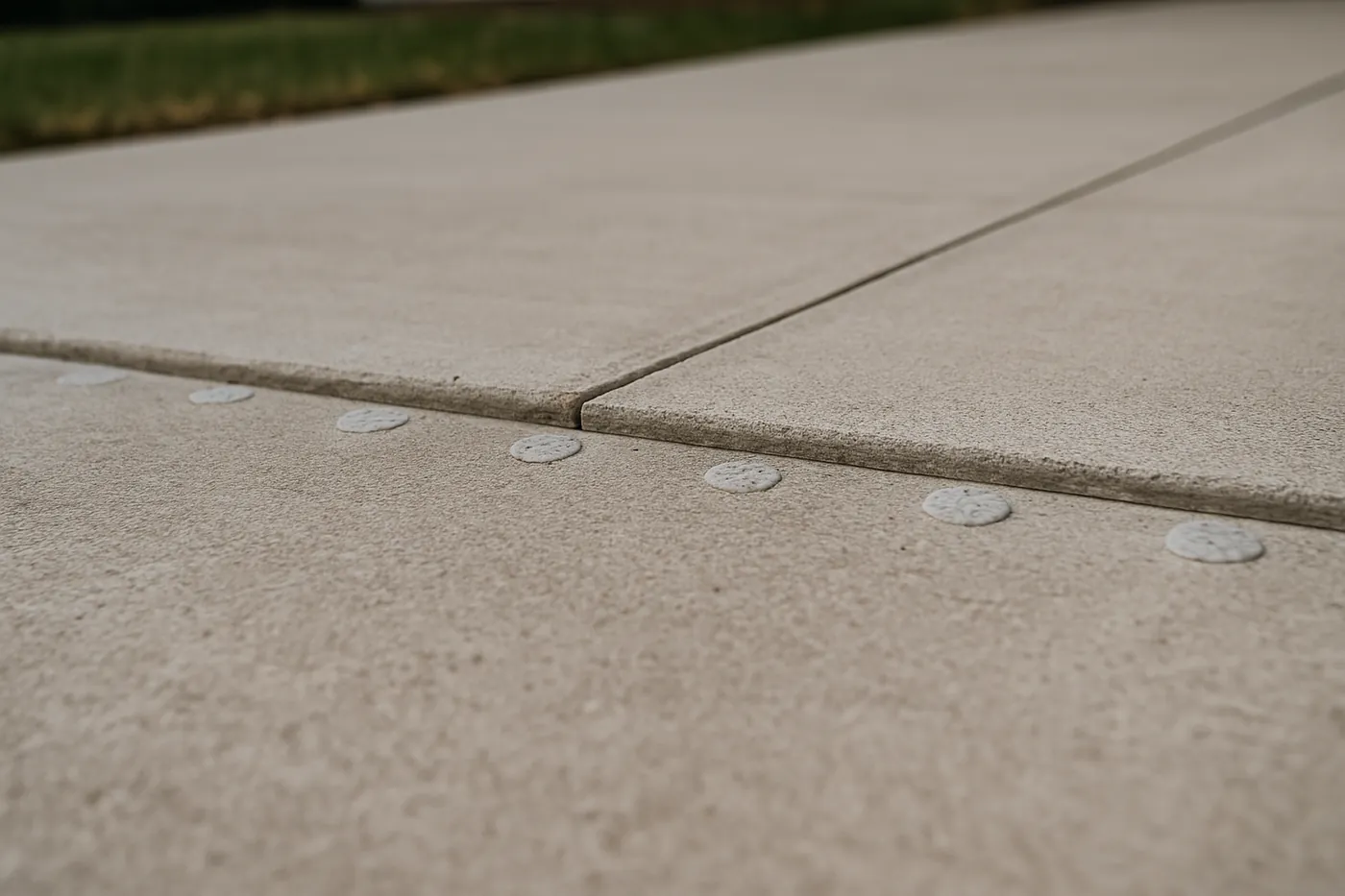
| Push piers to rock | $1,200–$3,000 per pier | Heavier masonry or brick homes with enough weight to drive to refusal |
| Helical piers | $1,400–$3,200 per pier | Lighter framing, porches, additions, or where a torque reading through variable strata is worth having |
| Void filling under a slab | Priced by measured volume | Support has been lost beneath a slab and there is nothing to lift against |
| Drainage correction alone | $1,500–$6,000 | Movement is early, elevations are still close, and water is clearly being concentrated |
What a real Fayetteville pier bid contains
- Floor elevation readings across the entire footprint, not just the cracked wall
- A pier layout drawn from those readings, with spacing and count justified
- A stated depth assumption and a written per-foot rate if the drive goes deeper
- Whether load testing is performed and at what test load
- Whether any void filling is anticipated and how it is measured
- The lift target — full recovery to level, or stabilization at current elevation
Stabilization is frequently the right call and it costs less. Lifting a house that has been down for fifteen years reopens finishes that adjusted to the new position. Ask which one your readings support before you decide, and the numbers are in the cost guide.
Piering questions, straight answers
What does foundation piering cost in Fayetteville?
Most full foundation repairs run $4,000-$15,000, with individual piers commonly $1,200-$3,000 each. In Northwest Arkansas the variable that moves the number is not depth alone but depth variability - bedrock can be six feet down at one corner and much deeper at the next, so pier count and pier length are set by what the installation finds. Ask whether the evaluation carries a charge when the specialist calls.
How deep do piers go here?
There is no honest single answer for this market. The Ozark karst surface is pinnacled: limestone highs alternate with clay-filled and soil-filled lows over short horizontal distances. One pier may reach refusal in a few feet while the pier fifteen feet away drives far deeper. Any company quoting a fixed depth for your house before driving anything is quoting an average, not your lot.
Can a pier land on rock and still fail?
A pier can land on rock and still fail, and it is the specific failure worth knowing about here. A pier can meet refusal on a thin limestone ledge or a loose boulder with an open void beneath it, read as solid, and later punch through. That is why competent installers verify with load testing rather than accepting the first hard stop, and why torque or pressure readings get recorded pier by pier.
Push piers or helical piers on Ozark ground?
Push piers use the structure's own weight to drive to refusal and suit heavier masonry homes. Helical piers screw in to a measured torque, which gives a capacity reading as they advance - useful on variable strata and required for lighter structures, porches, and additions that cannot supply reaction weight. See helical piers for how torque correlates to capacity.
Will piering stop the movement for good?
Where the piers are, yes. The supported section transfers load to competent bearing and stops participating in whatever is happening in the soil above. Piering does not change conditions under the sections nobody piered, which is why the scope should come from floor elevation readings across the whole footprint rather than from wherever the cracks happen to be visible.
Get a Fayetteville foundation evaluation
Tell us what the house is doing — a crack that keeps growing, a door that quit latching, a floor that dips toward one corner — so the evaluation starts from what you have seen. A local specialist serving Fayetteville calls you back.