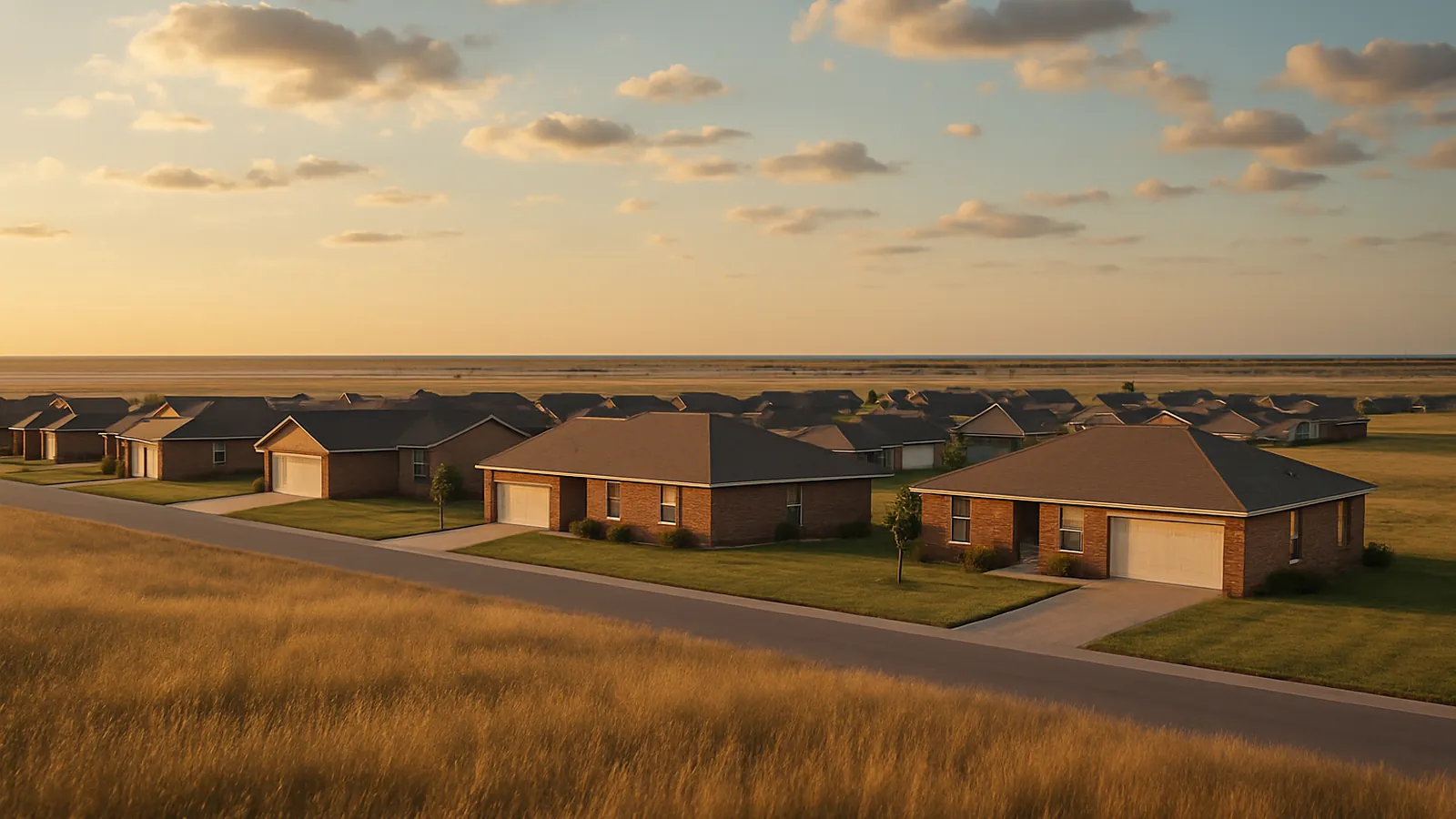
Foundation repair in Fayetteville runs $4,000–$15,000 for most full repairs, with piers at $1,200–$3,000 each and drainage at $1,500–$6,000. Ozark karst is the cause: water carries soil into limestone openings and support disappears. The elevation survey sets the scope; many local specialists don't charge for it, so ask when they call.
What the ground here actually does, why one lot can need two different repairs, and when the honest answer costs a few hundred dollars.
What is under a Northwest Arkansas house
The region sits on the Ozark Plateau, where limestone has been dissolving along its joints and bedding planes for a very long time. That process produces the visible features people associate with karst — springs, caves, sinkholes — and one invisible feature that matters far more to a homeowner: openings in the rock that soil can move into.
About 47.2 inches of precipitation falls here in an average year, in the National Weather Service record for Drake Field. Where that water concentrates at one point — a downspout, a low corner, an uncompacted trench — it infiltrates fast, finds fractures, and carries fine soil down with it. The technical name is piping. The practical result is that the material holding up part of your footing is not there anymore, and unlike clay movement, it does not come back.
Two mechanisms, sometimes one lot
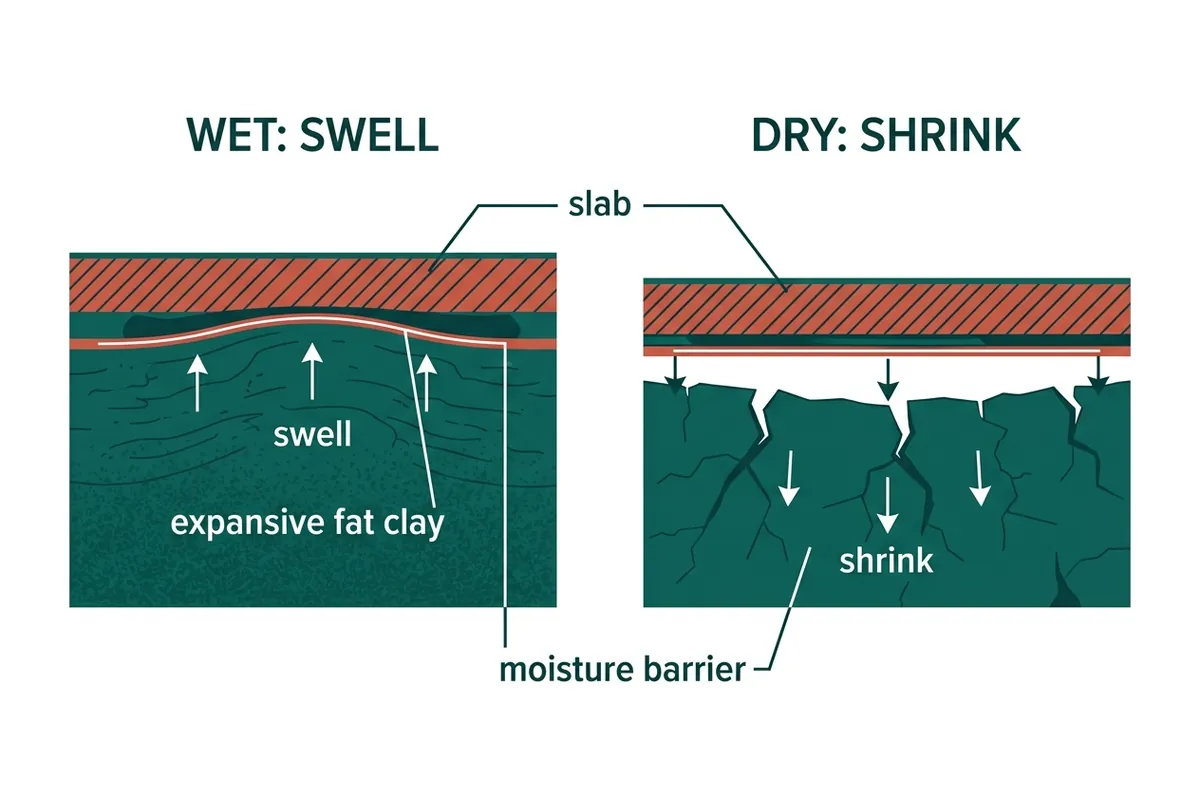
Karst is not the only thing happening. Pockets of expansive clay sit above the limestone in some places and not others, and clay behaves in the opposite way — it swells when wet, shrinks when dry, and moves a house back and forth on a seasonal cycle. The two conditions can genuinely occur under one house, because soil type can change within a single lot.
This is why the neighbor’s quote is a poor guide to yours, and why the diagnostic step is not optional here. Movement that reverses is clay. Movement that only goes one direction is lost support. The repairs are not interchangeable, and cracks alone cannot tell you which you have.
What the fix usually is
| What the house is doing | What it usually means | The work | Typical range |
|---|---|---|---|
| Cracks that widen every season and never close | Support being lost below | Piering to competent rock | $4,000–$15,000 |
| Cracks that open in a dry spell, close after rain | A clay pocket cycling | Moisture control first | $1,500–$6,000 |
| Hollow-sounding floor, a dish in one area | A void under the slab | Probe, then fill by volume | $3,500–$12,000 |
| Horizontal crack in a foundation wall | Lateral pressure, often saturated backfill | Structural assessment, promptly | $400–$1,500 |
| One half of a newer house dropping | Fill consolidating on a cut-and-fill pad | Helicals, torque recorded | $4,000–$15,000 |
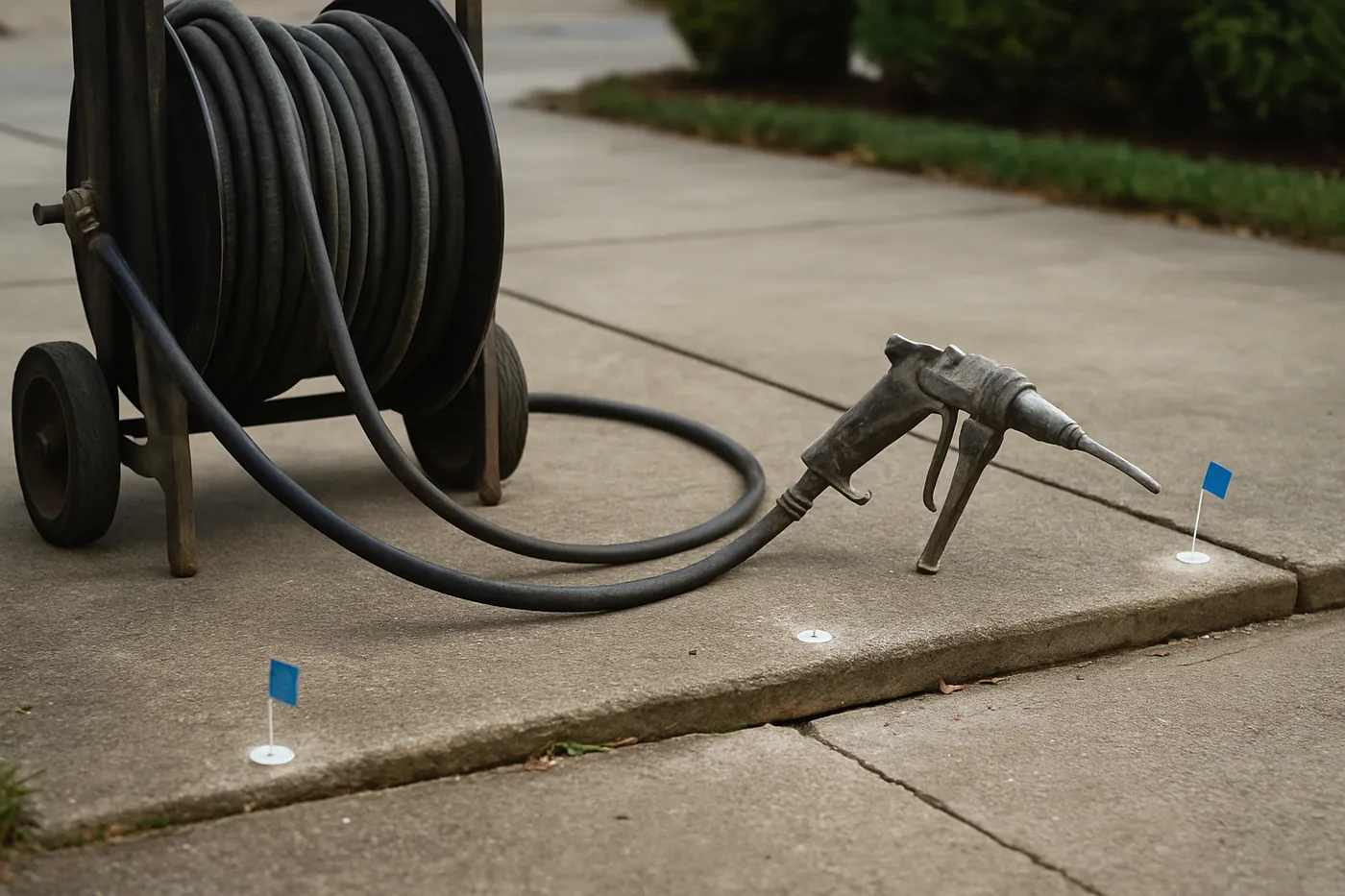
| Driveway or patio sinking, refilled before | Base erosion, occasionally soil loss below | Lift, and check the house | $500–$2,500 |
Every number above, and what moves it, is broken out in the Fayetteville cost guide — including the jobs where the honest answer is a few hundred dollars of gutter work.
Depth is the local make-or-break
In most markets the interesting question is how many piers. Here there is a second one that matters just as much: how deep, and onto what. The limestone surface is pinnacled, so one pier can reach sound rock quickly while the pier fifteen feet away drives far deeper. Worse, a pier can stop hard on a thin ledge with a cavity beneath it and read as competent bearing until it punches through.
That is why load testing matters more here than the industry average and why per-pier records are worth insisting on. Ask any bidder three things: what depth the price assumes, what the rate is if the drive goes deeper, and whether they load test rather than trusting refusal. A company that cannot answer those is guessing on ground that punishes guessing.
Why a good evaluation starts outside
Because on karst, water is not just a moisture issue — it is the excavation mechanism. Concentrated infiltration is what moves soil into the rock. So a downspout discharging at a corner, a patio funneling runoff to one spot, a trench that was backfilled loose, or upslope runoff crossing the lot are not side issues. They are the cause. A good evaluation walks the water path before it walks the house, and on a meaningful share of evaluations the honest scope turns out to be drainage rather than steel.
What we won’t recommend
- Piers before a survey. A pier count with no elevation numbers behind it is a price, not a design.
- A firm void-filling total before probing. Nobody can price a space they have not measured; ask for the rate instead.
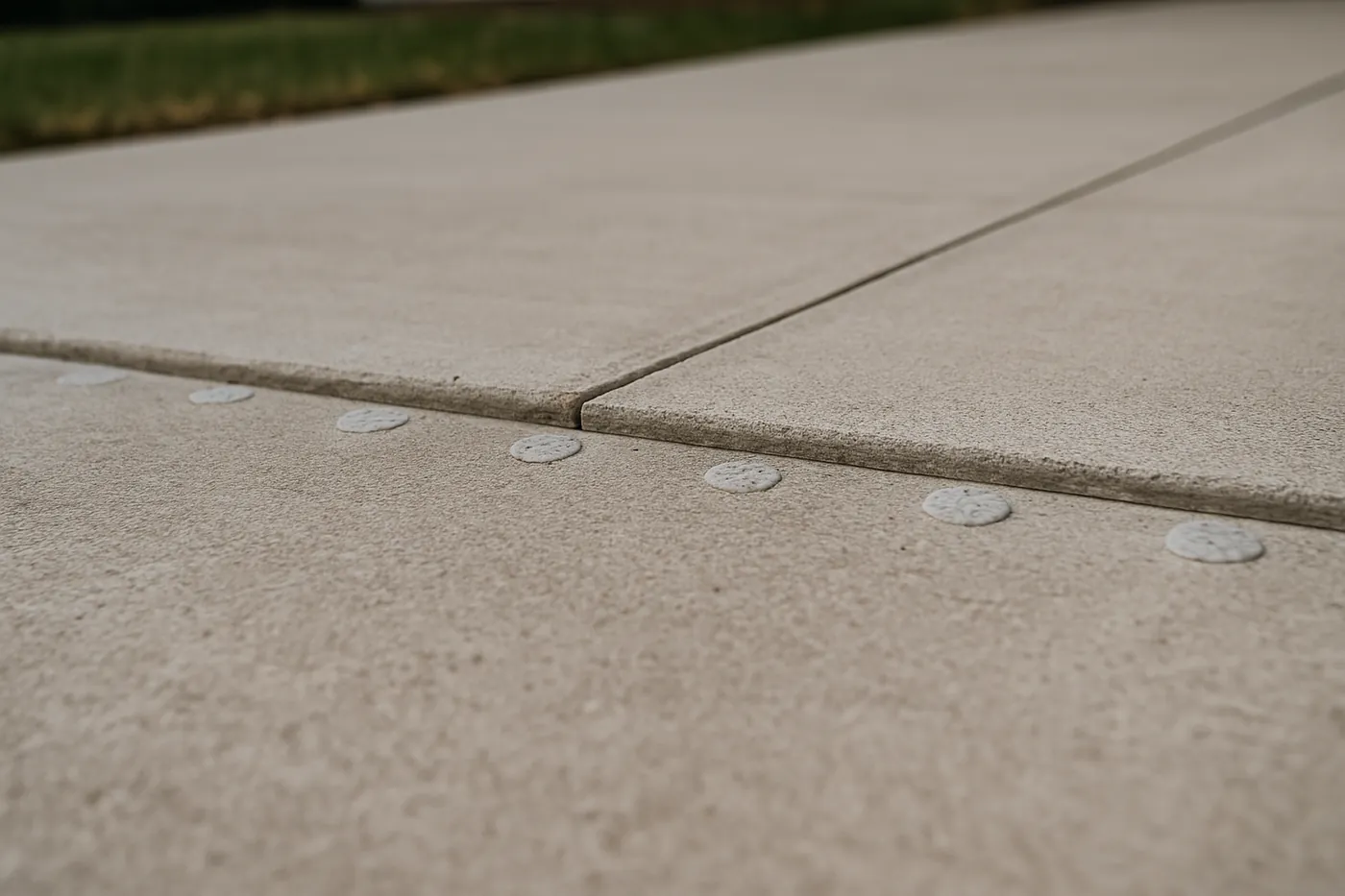
- Foam injection as house underpinning. Polyurethane is for flatwork; structural loads need engineered piers.
- Sealing an active crack. It produces a neat line that reopens, and it destroys the record of whether the crack was moving.
- Structural work while water is still concentrating. The water that carried soil away will do it again around a new pier.
Three questions get their own deep pages: how a survey tells karst soil loss from clay cycling, why helical piers report bearing capacity as they advance through variable strata, and what insurance actually covers when the earth movement exclusion applies to nearly everything.
Foundation questions Fayetteville homeowners ask
How much does foundation repair cost in Fayetteville?
Most full repairs run $4,000 to $15,000, with piers at $1,200 to $3,000 each. Slab work runs $3,500 to $12,000, drainage correction $1,500 to $6,000, and crack repair $400 to $1,500. Void filling is priced by measured volume. The floor elevation survey decides which you need; many local specialists don't charge for it, so ask when they call.
Why do Northwest Arkansas foundations move?
Two reasons, and they behave oppositely. The Ozark Plateau is karst - limestone dissolved along its joints - so water carries fine soil down into the openings and support is permanently lost. Separately, pockets of expansive clay swell and shrink with moisture. Soil type can change inside a single lot, which is why neighboring houses need different repairs.
Do I actually need piers?
Frequently not, and a good specialist will tell you when. A meaningful share of houses here need water managed rather than structure installed - gutters, extended downspouts, six feet of restored grade. The elevation survey separates real differential movement from cracks that stopped moving years ago.
What does the evaluation include?
Floor elevation readings across the whole footprint reported in inches, crack widths measured and dated, and a walk of the exterior water path. About an hour. If work is needed, ask for a written scope with a price on each line to take to other bidders.
Will insurance cover it?
Rarely. Standard policies exclude earth movement, and sinkhole collapse is typically excluded with it. The exception that pays is damage from a sudden accidental plumbing discharge under the slab. Establish the cause with an elevation survey and a plumbing isolation test before you file anything.
How deep do piers go in Fayetteville?
There is no single honest answer, and that is the local peculiarity. The limestone surface is pinnacled - sound rock high in one place, a soil-filled channel a few feet over - so depth is discovered during installation. What you should insist on is a written depth assumption plus a per-foot rate if the drive goes further.
Foundation repair across Northwest Arkansas
SpringdaleRogersBentonvilleBella VistaFarmingtonPrairie GroveElkinsGreenlandLowell all service areas
Get a Fayetteville foundation evaluation
Tell us what the house is doing — a crack that keeps growing, a door that quit latching, a floor that dips toward one corner — so the evaluation starts from what you have seen. A local specialist serving Fayetteville calls you back.